
LitBuy Hoodie Fabrics: French Terry, Fleece & GSM
Compare French terry, brushed fleece and fabric weight when reading LitBuy hoodie listings. Separate fibre content, inside construction and GSM before choosing a fabric.
Two hoodies can have similar colours and shapes but very different interiors. One has visible loops, another a brushed surface, and a third is described only as heavyweight. When browsing a LitBuy hoodie spreadsheet, understanding those descriptions helps you decide what to investigate without assuming a familiar logo settles the material.
Read a hoodie specification in three parts: fibre composition, inside construction and fabric weight. A higher GSM figure alone does not establish the softness, fit or durability of the finished garment.
Composition, construction and weight are separate specifications
Begin by separating the fibres from the way the fabric is made. A cotton-and-polyester percentage describes composition. French terry describes a fabric construction. Brushed-back describes a surface treatment. GSM is a fabric weight per unit area. These terms can appear together because they are not alternative answers to one question.
A listing that says cotton hoodie has not yet told you what the interior looks like or how heavy the fabric is. A listing that says fleece has not necessarily given the fibre percentages. Put each detail in its own comparison column so a persuasive description does not fill gaps it never answered.
For a hypothetical specification, write 80 percent cotton and 20 percent polyester, unbrushed loop interior, and 300 GSM as three fields. Those are illustrative values, not specifications for the products below. A useful seller response should connect the fields to the selected item and colour. If only one field is supplied, keep the other two unknown rather than completing them from another brand's product page.
| Field | Meaning | Useful evidence |
|---|---|---|
| Composition | The stated fibres and percentages | Composition label for the chosen item |
| Construction or finish | How the inside surface is made or treated | Interior close-up and description |
| GSM | Fabric mass per square metre | Item-specific fabric specification |
| Garment weight | Mass of the complete hoodie | Weight for the selected size |
French terry and brushed fleece: start with the inside
Nike's official Club French Terry Crew description identifies unbrushed loops on the inside. Its published Solo Fleece description separately identifies a brushed-back main body. CottonWorks also presents fleece and French terry as distinct options in its knit collection. These are useful, concrete examples of why the interior matters.
For an independent listing, ask for a close view of the reverse side of the main body fabric. An exterior logo image cannot identify the inside. Look for whether the description and image refer to the same colour and version. A lining photo from another option may create the impression that the item you selected has a finish it does not share.
Use the interior description to narrow your preference rather than predicting the whole wearing experience. You might prefer an unbrushed texture or want a brushed surface against a T-shirt. Actual softness, bulk and comfort still depend on the specific fabric and garment. A photograph helps identify a visible construction; it is not a substitute for handling the material.
What a GSM number actually measures
GSM means grams per square metre of fabric. A hypothetical one-square-metre piece of 300 GSM fabric has a mass of 300 grams. Half a square metre of the same fabric would have a mass of 150 grams, before adding any other materials or components. This calculation explains the unit; it does not estimate the weight of a finished hoodie.
The distinction matters because a complete garment also has a pattern, hood, pockets, ribbing, thread and possibly hardware. A larger hoodie can weigh more than a smaller one made from the same fabric. A seller's 700-gram garment figure is therefore not a 700 GSM specification.
CottonWorks' material files show multiple GSM values within both fleece and French-terry families. There is no reason to assume every member of one family has a single weight. Before comparing two advertised numbers, confirm that both describe the main body fabric in the same unit and not one fabric weight against one packed-product weight.
Why the highest number is not automatically the best choice
Suppose two otherwise fictional candidates are described as 280 GSM and 400 GSM. The second has more fabric mass per unit area if the figures are comparable. That statement does not prove it is softer, better made or more comfortable for your day. Nor does it provide a tested warmth ranking for the finished hoodies.
If you want a layer to carry in a small everyday bag, the added bulk may be a trade-off rather than an upgrade. If you want a standalone sweatshirt with a substantial feel, weight may be one of the characteristics you value. Decide which role the garment will serve before treating the larger number as a positive score.
Keep quality questions separate. How are the seams finished? Does the opening work as expected? Is the composition documented? A fabric-weight claim cannot answer those questions. A specification is useful because it helps describe the object you are choosing, not because every possible specification can be arranged into a single quality ladder.
A pullover and a zip-up: compare format before guessing fabric
The green graphic pullover and black Nike Tech Fleece hooded-jacket records below offer two practical formats. The pullover has a recorded item estimate; the zip-up also has three supplied QC photos reported with its record. The images here are catalogue illustrations, not those counted QC photographs.
For the pullover, ask for an inside close-up, fibre label and chosen-size measurements. For the zip-up, ask about the panel material, inside finish and the space needed over your normal T-shirt. Do not treat the Tech Fleece name as proof that this independent garment matches a particular official retail construction.
Neither record supplies verified GSM or fibre percentages. That prevents a numerical fabric-weight ranking, but it does not make the choice impossible: you can first decide whether you need a zip for temperature changes or prefer a pullover, then resolve the fabric specification. Pay more attention to an answered requirement than to a higher price or a more familiar logo.
| Product record | Reference item price | QC photos recorded | Next detail to confirm |
|---|---|---|---|
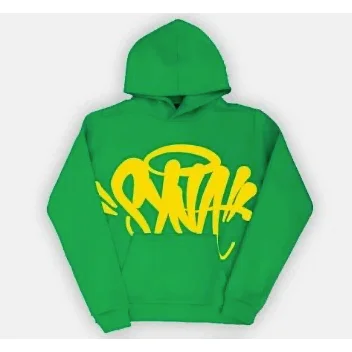 Green Hoodie with Yellow Graffiti Print ↗ Green Hoodie with Yellow Graffiti Print ↗ | ~$14.86 ¥107 | Not supplied | Ask for the inside finish, fibre label and chosen-size chart |
 Nike Tech Fleece Black Hooded Jacket Nike Tech Fleece Black Hooded Jacket | ~$30.42 ¥219 | 3 | Check panel material, inside finish and room over a T-shirt |
A hoodie for indoor days and a hoodie for changing temperatures
Consider two ordinary use scenarios. One person spends most of the day indoors and wants a sweatshirt for casual comfort. Another walks between buildings and repeatedly takes a hoodie off or opens it on public transport. They may value different fabric feel, bulk and closure arrangements even when their budgets match.
For the first person, ask whether the interior texture suits the clothing worn underneath and whether the hood becomes cumbersome while sitting. For the second, compare how easily the garment can be opened, carried or put into a bag. Neither scenario requires claiming that a particular GSM is suitable for a specific outdoor temperature.
Describe your own day in a few concrete phrases and use it to remove unnecessary features from the comparison. If a hoodie will usually go under a jacket, a very bulky hood or pocket arrangement may be inconvenient. If it is the outer garment, access to pockets may matter more. The fabric is part of that decision, but the garment layout also affects how you use it.
Pullover, full zip and crewneck change the fabric decision
A fabric you like may be available in several garment formats. A pullover requires taking the garment over your head. A full zip can be opened at the front. A crewneck has no hood. These simple differences affect how you adjust your outfit and store the garment during a normal day.
Compare a format you already use comfortably before introducing a material change. If your favourite pullover feels too bulky under another coat, decide whether the problem is the fabric, the hood or the overall cut. Replacing it with a heavier pullover because the advertised material sounds superior may preserve the original inconvenience.
When comparing two options, hold the format constant where possible. A zip hoodie and a crewneck made from different fabrics change several variables at once. You can still choose between them, but explain the reason honestly: easier front opening, less hood bulk or a preferred interior texture. That is more useful than claiming the entire difference is due to fleece versus terry.
Cotton-rich does not mean the whole garment has one composition
Read the label for the part it describes. The main body, rib trim, lining and decorative components may be identified separately. If a product page supplies one percentage and a label shows several component lines, record the main fabric and the relevant exceptions rather than reducing everything to one number.
Nike's official French-terry example publishes a cotton-and-polyester range and tells buyers to check the label for actual content. That illustrates why a product's specific information is more useful than an assumption that all sweatshirts from the same brand share a recipe.
For catalogue comparisons, do not transfer that composition to a hoodie carrying a similar logo or style name. Ask for the selected item's label. If you prefer a particular composition for the feel or care routine you already know, make that preference explicit. The article does not establish how an undocumented blend will behave, and a cotton percentage by itself does not demonstrate its finish or construction.
A worked comparison that keeps the unknowns visible
Imagine Hoodie A lists 320 GSM and provides an interior photo, while Hoodie B lists a 650-gram garment weight and no interior view. A comparison that writes 320 against 650 in one weight column is invalid: the figures measure different things. Keep fabric weight and whole-garment weight in separate columns.
Now suppose both have composition labels but only A identifies its construction. If your essential requirement is an unbrushed interior, A has information relevant to that requirement while B remains pending. If you simply want a particular graphic and are comfortable investigating the fabric later, the same gap may have a different priority. The decision follows the requirement, not a universal score.
Add a short reason beside each status, such as interior identified or fabric weight missing. This prevents a long product description from seeming more informative than a short one that answers your specific question. All figures in this example are hypothetical; they are not measurements of the pullover and zip-up records shown above.
| Illustrative comparison | Hoodie A | Hoodie B |
|---|---|---|
| Fabric weight | 320 GSM stated | Not stated |
| Complete garment weight | Not stated | 650 g stated |
| Interior evidence | Close-up supplied | Not supplied |
| Can the weights be ranked together? | No: different units and objects | No: different units and objects |
Care information helps you keep the material choice practical
A hoodie you wear often needs instructions you can follow. Obtain the care label for the actual item and check whether the requirements fit your normal washing and drying arrangement. Avoid treating a general article about cotton as instructions for an unknown printed or mixed-material garment.
If you are choosing partly for an applied graphic, ask whether the seller provides any additional instructions for that decoration. Those instructions should be considered alongside the garment label. Do not deliberately use heat to force a size change or assume every cotton-rich sweatshirt shrinks by a predictable percentage.
Keep a simple baseline after the item is available for inspection: relevant dimensions, the label and the initial visible condition. If the fit changes later, consistent measurements help describe what changed. That record does not predict durability; it gives you a practical way to distinguish a changed measurement from a change in how you happened to photograph or lay out the garment.
The 9.5 kg everyday-pickups story provides a real observation to distinguish from a specification. The buyer described a burgundy Stussy hoodie as substantial and initially stiff, then softer with use. That is a reported experience, not a measured GSM value. The same post described a different zip-up logo fading after washing, so care and decoration deserve their own questions rather than being folded into one fabric score.
The 4.5 kg Germany story adds a different preference: the buyer liked a grey Polo hoodie’s soft feel without a baggy shape. These experiences help you name what you want to ask about. They do not establish that either catalogue record in this article is the same seller option, or will behave the same after washing.
Which fabric question should you resolve first?
Start with the requirement that could make the hoodie unsuitable. If the interior texture is essential, obtain an interior view. If you want documented fabric weight, clarify GSM. If the garment must work under a coat, investigate the hood and body bulk in the intended combination. These are different questions and may call for different evidence.
Once the requirement is addressed, compare preference details such as the graphic, colour and price. A well-described basic option can be easier to evaluate than a highly styled entry with no material information. That does not make the basic option universally better; it makes your decision more explainable.
For outfit proportions, the jeans article provides a separate discussion of leg shape and hems. For an insulated winter coat, the puffer article examines filling specifications instead of sweatshirt construction. Keeping those questions separate helps you choose the next article that matches the decision you actually have to make.
Related collections
Browse T-shirt and hoodie records together for everyday outfits. Compare measurements, colours and reference item prices before opening the selected seller option.
LitBuy Products with QC CountsBrowse LitBuy listings with a recorded QC photo count above zero. Open the exact product to check its images; the count is not a quality rating.
References & sources
Nike and CottonWorks support the textile terminology and published retail examples. Worked calculations and use scenarios are our own. Retail specifications do not establish the fabric of independent catalogue entries. Sources reviewed: 2026-10-14.
- Nike — Club French Terry CrewAn official example describing unbrushed interior loops and item-specific fibre content.
- NIKE, Inc. — Studio Fleece and Solo FleeceA published distinction between fabric weights, finishes and garment fits; not a description of our catalogue items.
- CottonWorks — Digital Cotton BasicsThe industry material library treats fleece and French terry as distinct knit constructions.
- CottonWorks — Knit fabric filesShows different GSM values within fleece and French-terry fabric families.
- Hoodie and sweatshirt catalogueCatalogue background for the pullover record; the linked zip-up record comes from the jacket category. GSM is not verified.
Keep exploring
LitBuy Jeans Fits: Straight, Tapered & Baggy Compared
Compare straight, tapered and baggy jeans through rise, thigh room, inseam and hem width. Use the worked measurements to choose a silhouette before a size.
Read articleHow to Choose a LitBuy Puffer: Filling, Fit & Budget
Compare stated filling, garment measurements and room for layers. Four LitBuy listings illustrate which specifications to confirm before choosing a winter jacket.
Read article