
LitBuy Jeans Fits: Straight, Tapered & Baggy Compared
Compare straight, tapered and baggy jeans through rise, thigh room, inseam and hem width. Use the worked measurements to choose a silhouette before a size.
A pair of jeans can fit at the waist yet look completely different from the outfit you pictured. The difference may be the leg shape, where the waistband sits or how the hem meets your shoes. This article focuses on those silhouette decisions for a LitBuy jeans search rather than treating every fit question as a reason to pick a larger size.
Choose the leg shape you want before choosing a size. Compare rise, thigh room, inseam and hem width together; sizing up a narrow cut does not reproduce every feature of a deliberately loose pattern.
Fit names describe a shape, not one shared size chart
Levi's official denim guide describes straight legs as maintaining width between knee and hem, tapered legs as narrowing toward the ankle, and loose or baggy fits as offering more space. It also distinguishes relaxed fits from closer slim and skinny cuts. These terms provide a vocabulary for the silhouette you want.
Independent listings do not necessarily apply the vocabulary consistently. A title containing slim may describe the seller's intended look rather than a measurement standard shared with another seller. Identify the advertised shape, then ask whether the garment dimensions and photographs support that interpretation.
Treat the fit name and size as separate fields. Straight is not a waist size, and baggy does not tell you an inseam. Two pairs with the same size label can distribute room differently through the seat, thigh and lower leg. The aim is to compare those proportions, not to infer a complete pattern from one word.
| Shape to investigate | Main visual question |
|---|---|
| Straight | Does the lower leg maintain a similar width? |
| Tapered | How much does the leg narrow below the knee? |
| Loose or baggy | Where is the extra room distributed? |
| Bootcut | How does the lower leg widen toward the hem? |
Start with a reference pair, not a model’s height
Choose jeans you already wear and identify what you would change. Perhaps the waist is comfortable but the lower leg is narrower than you want. Perhaps the thigh is roomy but the length creates more folds than you like. That description points to a pattern change rather than a vague request for a better fit.
Lay the reference pair out consistently and record a few garment measurements. Include the waist laid flat, front rise, thigh width at a defined point, inseam and hem opening. Keep the measurement positions with the numbers so another person can repeat them. A thigh measurement near the crotch cannot be compared directly with one taken much further down.
Model height is supporting context, not a substitute for this comparison. Two people of the same height can want different waistband positions and different hem lengths. A photograph may also include styling choices such as a cuff or a waistband worn lower. Use it to discuss the desired look, then use dimensions to investigate the selected option.
Rise changes where the rest of the garment begins
Rise concerns the relationship between the crotch and waistband. For a garment comparison, define the points used, such as the crotch seam to the top of the front waistband. Keep front and back rise separate when both are available. Do not confuse that garment measurement with the height at which you intend to wear the jeans.
If you move a waistband lower on your body, the hem can sit differently even though the inseam has not changed. That is why copying an outfit's apparent trouser length without considering how the model wears the waistband can produce an unexpected result.
Use a simple preference statement: waistband at my usual position, enough room to sit, and the hem landing where I want with my normal shoes. Then compare a reference pair that achieves those things. If a candidate has a different rise, investigate whether that difference helps the silhouette or merely changes the wearing position. The article does not establish a universally correct rise for a particular height or body shape.
Inseam and outseam are not interchangeable
Inseam follows the inner leg; an outseam follows the outside length from the waistband area. A seller may report one while a buyer expects the other. Ask what the number describes before deciding that two pairs are the same length. The rise and waistband arrangement can make their total lengths differ even when the inner-leg lengths match.
Levi's body-measurement guide identifies inseam as an inner-leg measurement. For a seller's garment chart, still confirm the method used. A body measurement, a nominal length printed on a label and the measured inseam of a garment are related pieces of information, but they are not identical records.
In a fictional comparison, two pairs both state an 80 cm inseam but have different rises and outer lengths. That does not create a contradiction. It tells you that the jeans may start and sit differently. Match the method to your reference pair, and avoid converting a single length figure into a promise about where the hem will land in an outfit.
A worked silhouette comparison using four measurements
Imagine your reference jeans have a 31 cm thigh width, 23 cm knee width, 21 cm hem opening and 78 cm inseam. Candidate A measures 31, 22, 17 and 78 cm at matching points. Candidate B measures 35, 26, 25 and 80 cm. These are illustrative garment figures, not measurements of the catalogue entries below.
Candidate A keeps similar thigh room while becoming narrower toward the hem. Candidate B adds room through the leg and a little length. Neither difference can be summarised by saying one is just a larger version of the other. The distribution of width is part of the pattern.
If you want more room near the ankle but like your current waist and thigh, Candidate A moves in the opposite direction. If you want a fuller leg, Candidate B is worth investigating, but its waist and rise still need to be checked. This comparison identifies a useful next question rather than declaring that either pair will fit a specific person.
| Illustrative flat measurement | Reference | Candidate A | Candidate B |
|---|---|---|---|
| Thigh | 31 cm | 31 cm | 35 cm |
| Knee | 23 cm | 22 cm | 26 cm |
| Hem opening | 21 cm | 17 cm | 25 cm |
| Inseam | 78 cm | 78 cm | 80 cm |
Choose the hem effect you want with your actual shoes
Try your reference pair with the shoes you intend to wear most often. Note whether the hem sits above the shoe, rests lightly on it or forms several folds. Those observations define a styling preference more clearly than asking for the same inseam as a photograph on the internet.
A narrow opening and a wide opening can meet the same shoe differently. The result also depends on the fabric and how the jeans are worn. We cannot calculate the exact folds of an undocumented garment from a size chart alone, but we can identify which variables are changing.
For a practical comparison, keep the shoes constant while you consider two trousers. If you change both the shoe shape and the jean cut at once, it becomes harder to identify what produced the silhouette you prefer. Save front and side views of your own reference outfit, and use them to describe the desired hem position without treating another person's body proportions as your measurement guide.
Cuffing and extra length solve different styling problems
A cuff deliberately folds the hem. Extra length leaves more material to settle around the shoe. Both can change the look, but they are different decisions. If you plan to cuff the jeans, measure or estimate the amount of length that the fold will take up and compare the result with your desired landing point.
For a hypothetical 80 cm inseam, a fold that effectively shortens the inner leg by 3 cm leaves approximately 77 cm. That is a simple length illustration. The real fold may be arranged differently, and thick fabric or repeated folds can change the visual result. Do not assume every cuff has the same depth.
If you prefer an uncuffed hem, investigate the offered length before relying on alteration. Shortening may change decorative details or remove the original hem finish, and widening a narrow opening is a different alteration problem altogether. Ask what can actually be changed. Buying a shape close to your goal gives you fewer variables to resolve than assuming a tailor can recreate every detail later.
Sizing up does not guarantee a deliberately baggy silhouette
Choosing a larger size can add room, but it may also change the waist, rise and length in ways you did not want. A cut designed with a broader leg may distribute that room differently. That is why sizing up a slim listing should be treated as an option to investigate, not a guaranteed method of creating another fit.
Compare the charts across sizes when available. If the waist increases but the lower leg remains relatively narrow, moving up a size may leave you with a loose waistband and a silhouette that still does not match the brief. A belt can hold a waistband, but it does not redesign the leg pattern.
Write the desired change precisely: more thigh room, a wider hem, a shorter inseam or a different rise. Then look for a candidate whose measurements address that change while keeping the parts you already like. This is especially useful when two titles both say oversized but their charts suggest different proportions. The words are a starting point; the pattern dimensions explain more of the decision.
Stretch claims need a separate reading
The cut and the fabric are independent parts of the comparison. A narrow-looking jean may be described as stretch, while another is described as non-stretch. Levi's retail guide separates these fabrication choices from its fit categories, which is a useful reason to keep them in separate columns.
For a catalogue listing, obtain the stated composition and ask what the seller means by stretch. Do not infer flexibility from a dark wash or from how the model poses. An elastane percentage, where supplied, identifies a stated fibre contribution; it does not by itself quantify recovery, comfort or how the jeans will feel after use.
If you already like a reference pair's flexibility, preserve its label information as context when asking about a candidate. Explain what you need during normal sitting and movement rather than only asking whether the fabric is premium. We have not tested the stretch or recovery of the directory's jeans, so this article does not rank those properties from photographs.
Three catalogue cuts to investigate: straight, slim and wide
The three entries below have current titles that explicitly describe straight, slim and wide-leg shapes. That makes them better starting points for a silhouette comparison than a title describing only a wash or graphic. Their reference prices come from one snapshot, and none has a supplied QC count.
Treat the fit words as the listing’s description, not a pattern measurement. For the dark-wash straight entry, request thigh width, knee width and hem opening in the selected size. For the slim black entry, add the stated stretch composition and a seated-fit comparison with your own jeans. For the wide-leg entry, check how the inseam and hem opening work with your actual shoes.
The current wide-leg title says Unbranded even though its URL retains a different historical name. The current title is what we show. A URL word does not establish brand, cut or material. Keep the source identity beside the current description so you do not silently replace an option when its translated name changes.
A buyer in the 9.5 kg clothing share described one denim pair as sturdy and another as soft but expensive. Those observations illustrate that hand feel and price are separate from leg shape. They are not tests of the three entries here. Use them to refine your questions after selecting the silhouette you want.
| Product record | Reference item price | QC photos recorded | Next detail to confirm |
|---|---|---|---|
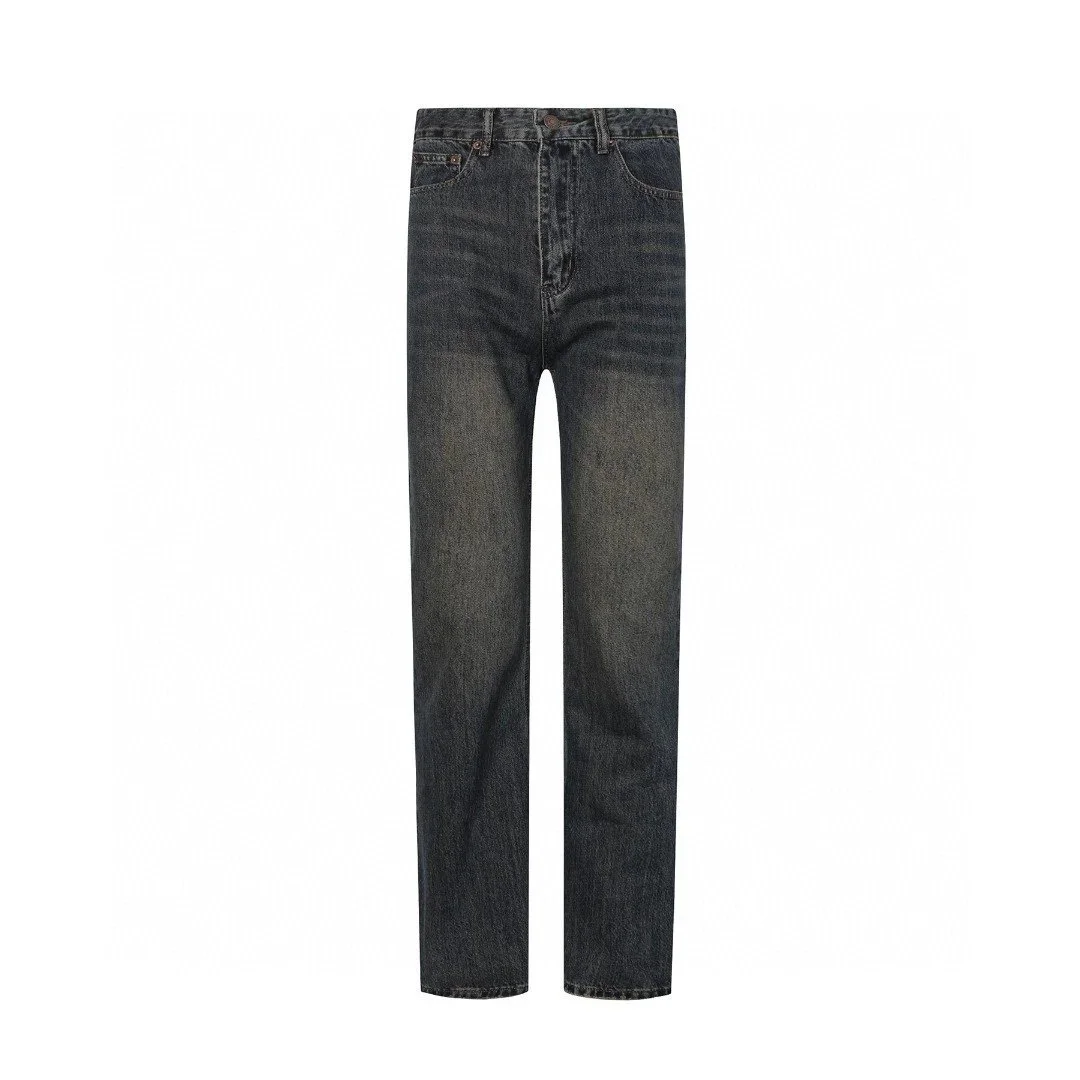 Dark Wash Straight Leg Jeans ↗ Dark Wash Straight Leg Jeans ↗ | ~$33.06 ¥238 | Not supplied | Compare thigh, knee and hem widths in the selected size |
 Slim Fit Black Jeans ↗ Slim Fit Black Jeans ↗ | ~$41.33 ¥297.60 | Not supplied | Check seated room, rise and stated stretch composition |
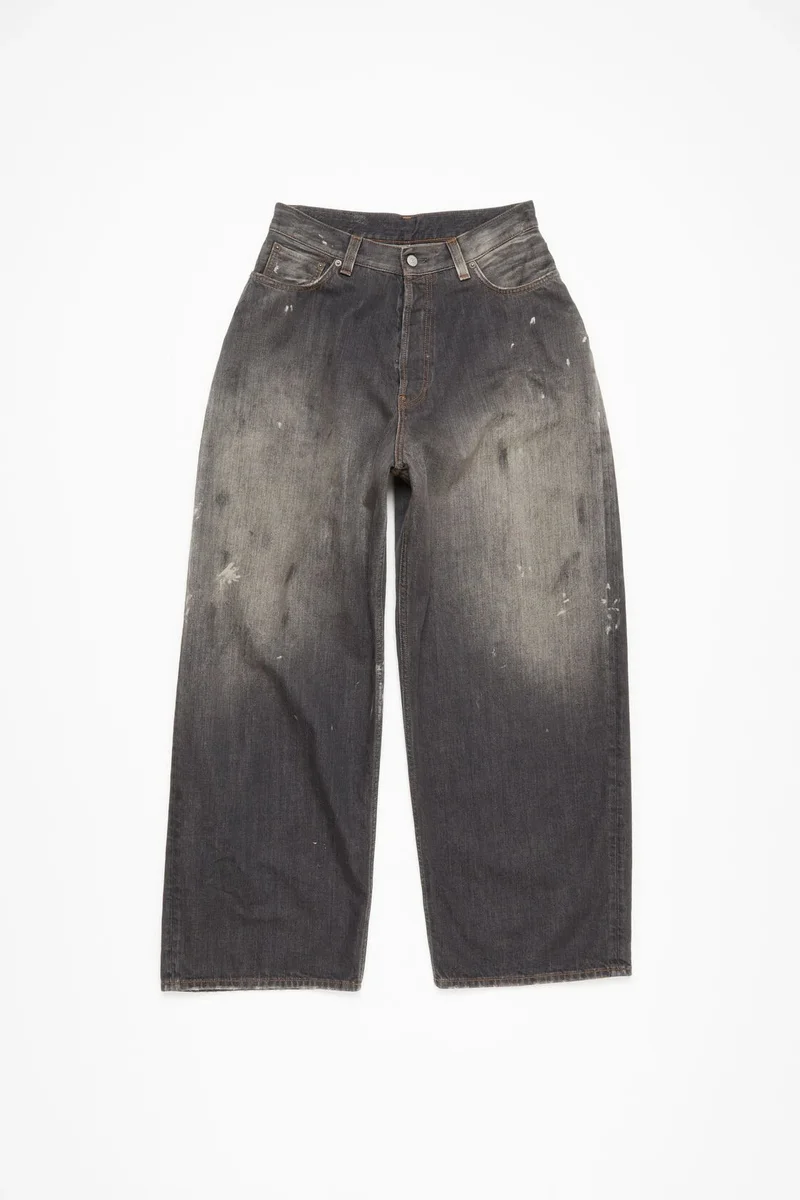 Unbranded Distressed Wide Leg Jeans ↗ Unbranded Distressed Wide Leg Jeans ↗ | ~$46.11 ¥332 | Not supplied | Compare inseam and hem opening with your shoes |
Use the top half of the outfit as another reference
A long hoodie, short sweatshirt and tucked-in shirt expose different amounts of the waistband and rise. Try the jeans brief with the kind of top you normally wear. The aim is not a universal proportion rule; it is to see whether the candidate solves the outfit you actually want.
For example, if your usual hoodie covers the upper part of the jeans, the visible leg width and hem may dominate your preference. If you tuck in a shirt, the waistband position and front rise become more visible. Keep that difference in mind when comparing photographs styled with very different tops.
The hoodie-fabric article addresses a separate decision: construction and fabric weight. Once you have chosen a top you like to wear, this jeans comparison helps evaluate the lower half. Keeping the questions connected but distinct makes the outfit decision clearer than repeatedly changing both garments and then trying to identify which one was responsible for the result.
Related collections
References & sources
Levi’s official guides support fit terminology and measurement context. The outfit comparisons and numerical examples are our own; measurements and fabric behaviour of catalogue items have not been independently tested. Sources reviewed: 2026-10-14.
- Levi’s — Men’s Denim Fit GuideOfficial definitions of straight, tapered, relaxed, loose and bootcut fits.
- Levi’s Customer Service — Product Size GuideBody waist, hip and inseam measurement context; not a size chart for independent sellers.
- Pants and shorts catalogueSource of the three title-labelled cut examples. Verified garment measurements are not supplied.
Keep exploring
LitBuy Hoodie Fabrics: French Terry, Fleece & GSM
Compare French terry, brushed fleece and fabric weight when reading LitBuy hoodie listings. Separate fibre content, inside construction and GSM before choosing a fabric.
Read articleLitBuy Sneaker Comparison Under $50: Three Listing Examples
Compare two Air Force 1 listings and one Gel-Kayano 14 listing below a $50 item budget. Review recorded prices, budget headroom and available QC counts.
Read article